
France enters a new era
With regard to competitiveness, the sustainability and support of the French shipbuilding industry are major challenges for national and European strategic autonomy. To combat distortions of competition, the shipbuilding industry must receive state support to ensure sector’s productivity.
The implementation of an appropriate economic framework, the revival of public procurement and retaliatory measures would restore fair competition conditions for the industry to ensure the sustainability of its activities.
Furthermore, exports are now essential for the shipbuilding sector, whether for shipyards or equipment manufacturers. For maritime vessels, the opening of markets in the 1980’s had a considerable impact in terms of loss of industrial capacity and job losses.
Distortions of competition are endangering the sector, hence the work undertaken with national and European authorities.
The maritime and costal economy has never been so important: 95% of goods and 901% of data flows pass through the oceans. More than 60% of world’s population lives in large coastal zone, meaning that 3.8 billion people reside less than 150km from the shore. The challenge of protecting and securing the oceans, their fishery and mineral resources, and maritime routes is considerable. French manufacturers have considerable expertise in maritime surveillance, sea observation, maritime safety and security, and marine pollution.
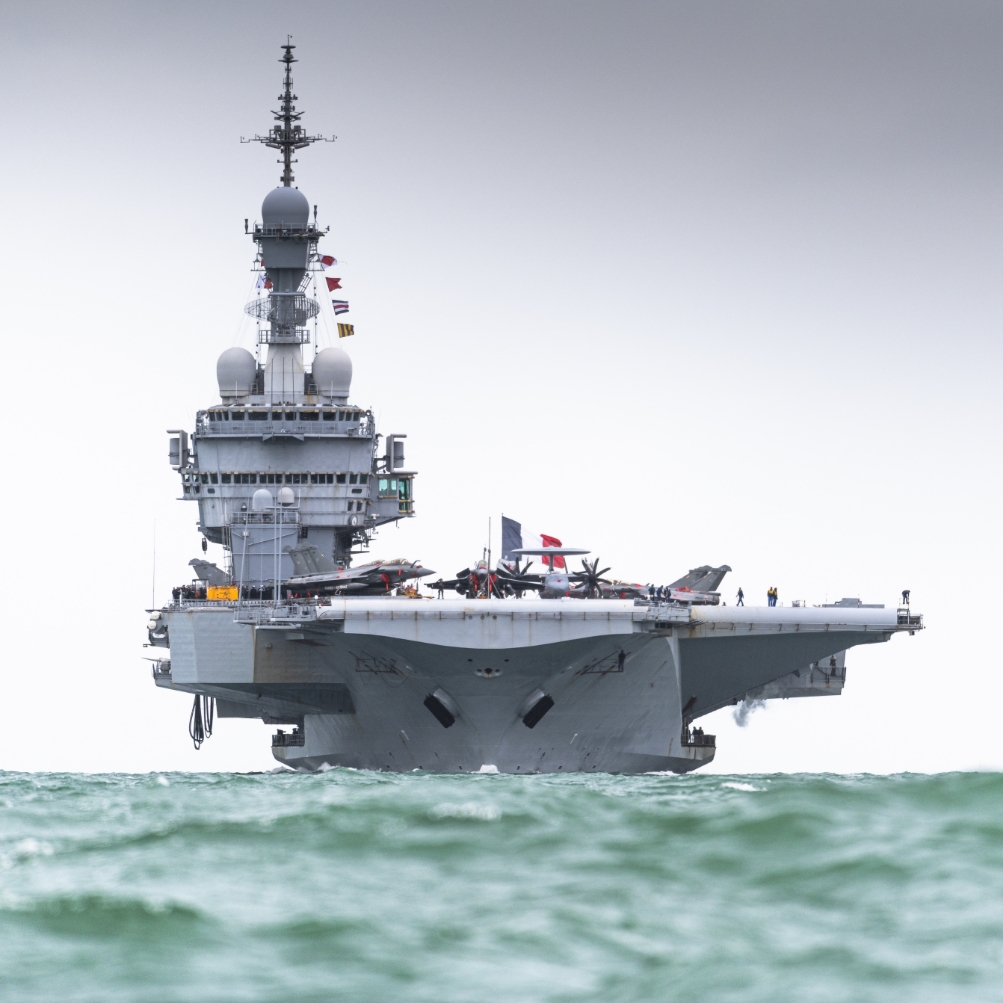
SIGNIFICANT UNDERCAPACITY IN FRENCH INDUSTRIAL PRODUCTION
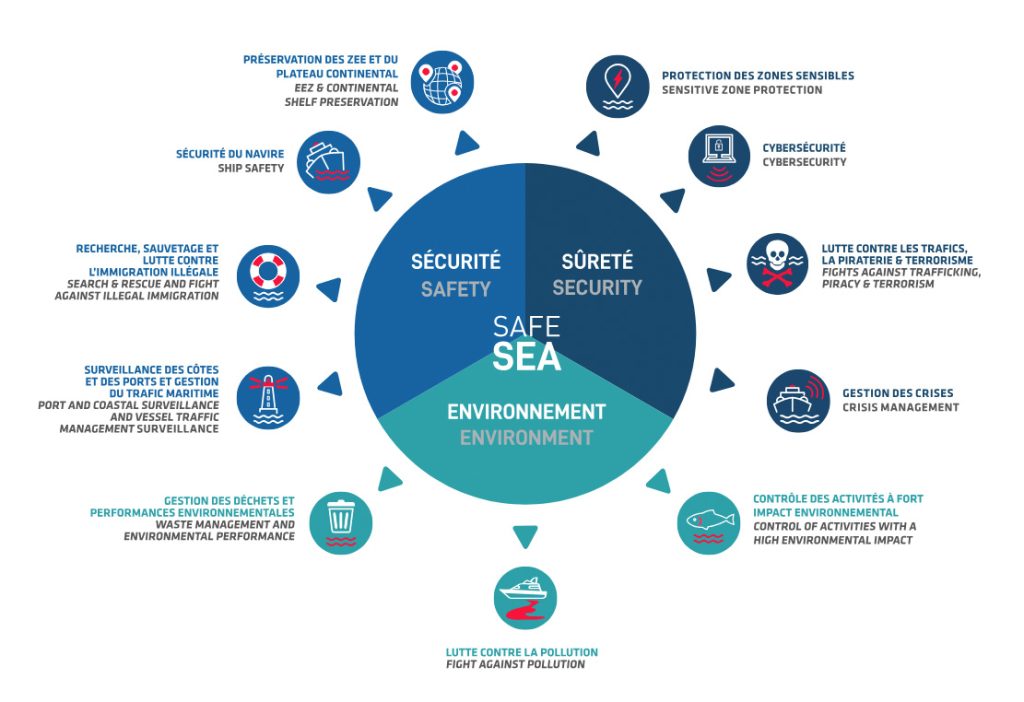
mARItime security
It aims to protect ships from criminal activities that may take place at sea (piracy, slave trade, drug trafficking, terrorism).
#PROTECTION OF SENSITIVE AREAS
involves defending specific maritime areas and installations (offshore oil platforms, offshore wind farms, container terminals, etc.).
#THE FIGHT AGAINST ILLEGAL TRAFFICKING
(drugs, weapons, humans) is now a major challenge for States. In recent years, numerous measures have been taken at international level to systematize efforts to combat such trafficking.
#PIRACY AND TERRORISM
There are two types of threats that affect a growing number of ships at sea. The means deployed to counter these phenomena must be dynamic and take international law into account.
#CRISIS MANAGEMENT
at sea is the ability to prevent and combat the development of land conflicts from the sea, through maritime forces deployed or pre-positioned around the world.
they are experts in maritime security






Maritime Safety
It concerns the prevention of risks of natural origin or caused by maritime navigation (collisions, groundings, fires, explosions).
#COASTAL AND PORT SURVEILLANCE
is essential insofar as these strategic areas are densely populated and host critical facilities of vital importance to States.
#SEARCH AND RESCUE (SAR)
refers to actions taken following accidents or natural disasters. These activities, which can be complex, require significant resources and well-trained personnel.
#MARITIME TRAFFIC MANAGEMENT
is essential in high-traffic areas to prevent accidents and limit environmental damage. Regional controls are necessary to complement existing national and international regulations.
#THE EXCLUSIVE ECONOMIC ZONE (EEZ) AND THE EXTENSION OF THE CONTINENTAL SHELF
is a priority for many States wishing to extend their sovereign rights beyond their territorial waters. Maritime areas that have not yet been explored need to be regulated and protected so that they can be preserved for future generations.
They are maritime safety experts
the maritime environment
The maritime environment is defined by oceans, seas, bays, estuaries, waterways, coastal regions and ports. Protecting it involves preserving its biodiversity and resources by preventing unauthorized spills of oil and chemicals, preventing accidental or deliberate pollution, and controlling fishing and marine aquaculture.
#FISHING CONTROL
ensures compliance with regulations in force in order to protect fisheries resources.
#POLLUTION CONTROL
includes combating deliberate discharges of pollutants at sea and accidental pollution.
#DANGEROUS TRAFFIC CONTROL
focuses on ships carrying dangerous goods on the maritime routes they use and reports on damage observed.
#WASTE MANAGEMENT
plays an important role in controlling and reducing the quantities of waste discharged into the sea by ships.