Civil shipbuilding
the 2022 presidentia election
Mars 2022

GICAN (the French Marine Industry Association) is the professional body representing the French naval sector. It brings together over 240 industrialists and organizations from the maritime domain. Its membership includes shipyards, systems integrators, equipment manufacturers, subcontractors, engineering firms, and naval architects, along with all companies involved in civil shipbuilding, naval defense, safety and security, marine renewable energies (MRE), and ocean conservation. The scope of naval activities extends beyond the surface and subsea waters to include the seabed, shorelines, rivers, and aero-maritime space. GICAN’s activities thus encompass all these domains and the wider maritime technology industry.
Download our position paper
GICAN member companies demonstrated resilience and strong adaptability throughout the health crisis. However, as a long-cycle industry, the sector fears a downturn in 2-3 years. While current order books remain relatively full, they were not replenished by new orders in 2020 and 2021.
GICAN represents a sector that creates high-tech jobs across French regions and is a major exporter. The industry is determined to regain its pre-crisis competitiveness and economic dynamism. France’s development will be driven by the sea; an ambitious maritime policy would be meaningless without a robust industrial tool to support national sovereignty.
Key figures for the french naval industry (Civil and Defense) :
members
bn€ annual turnover (approx. 55% defense / 45% civil).
jobs
percents export share
objectives :
ensuring sector sustainability and sovereignty
Regarding civil shipbuilding, GICAN is active within SEA Europe (the European Ships and Maritime Equipment Association) on the critical issue of the EU’s Foreign Subsidies Regulation. This is the first European instrument in over 20 years to address market distortions, primarily from Chinese and South Korean competitors even if it does not cover all issues, such as currency undervaluation or socio-environmental standards.
To maintain France’s strategic and industrial autonomy, it is essential to monitor and protect the subcontracting fabric. Key actions include: maintaining control over foreign investments and accelerating export growth.
driving recovery through orders
1. Accelerating public procurement
The sector must be able to rely on public orders. A significant portion of these contracts, from both the State and Regions, should be directed towards the French or European industrial fabric, particularly SMEs and Mid-caps (ETIs). Regionally, this includes port activity vessels, passenger shuttles, specialized ships (dredgers, buoy tenders, cable layers), and marine renewable energy projects.
2. Developing an ambitious export and maritime cooperation plan
The civil shipbuilding industry generates 95% of its new-build turnover through exports. This has a positive impact of one to two billion euros per year on the French trade balance. It should be noted that for naval defense, the export share is lower but remains essential for many French players in the sector. Several issues must be addressed to enhance the competitiveness of the French industry:
• Better coordination with State services is fundamental in terms of “economic intelligence” and commercial presence, particularly in priority trade zones, while encouraging business clusters to provide joint offers.
• State support for exports requires the development of aid adapted to different types of companies. This work must be carried out in conjunction with the Ministry of Economy, Finance, and Recovery.
3. Linking maritime transport aid to local production
The objective is to implement aid for shipowners, particularly for the acquisition of green vessels, which would be linked to the share of orders (for both ships and equipment) placed at the French or European level.
Accelerating r&d and decarbonisation
1. Supporting maritime R&D
Since 2018, the Council for Research and Innovation of the Marine Industry (CORIMER) has served as a platform for dialogue between the State and the industry, directing projects toward public support mechanisms, particularly those under the Investment for the Future Program (PIA). CORIMER has progressively brought together all stakeholders around a common Research and Innovation (R&I) agenda, based on technological roadmaps: Smart Ships (intelligent ships and autonomous systems), Green Ships (decarbonization and eco-friendly vessels), Smart Yards (new materials and smart shipyards), and Next-Gen Offshore Industry.
2. Greening usages and processes
The Green Ship technological roadmap, developed in conjunction with end-users, sets the course for the R&D efforts required to generate necessary technological breakthroughs and guide the selection of industry projects within the CORIMER framework. Beyond these R&D activities, the challenge lies in the deployment and acceleration of the industrial and economic maturity of these solutions. A joint State-Industry consultation is underway to best support the construction and acquisition of decarbonized vessels (which involve a 10% to 20% cost premium, or more, compared to traditional ships), in compliance with new European and global requirements.
3. Directing ‘Fit for 55’ revenues toward maritime greening
GICAN supports the ambition of the European Green Deal, as reflected in the development of the “Fit for 55” legislative package. This represents an opportunity both to combat climate change and to deploy an ambitious economic and industrial strategy for the shipbuilding and marine equipment sectors. Revenues generated from the extension of carbon quotas (ETS) to the maritime sector, along with the provisions of FuelEU Maritime, must be allocated to ship transformation—focusing on both the development and the deployment of green technologies at both the European and French levels. The future fuels for our sector are still subject to significant techno-economic uncertainties; therefore, public policies must focus on emission reduction targets across the entire fuel life cycle (Well-to-Wake) to encourage all energy-efficiency technologies.
Conducting an inventory of dependencies on countries like China (for certain raw materials) or restrictions related to US ITAR regulations to pinpoint where French sovereignty must be reinforced.
Furthermore, under the EU’s proposed Carbon Border Adjustment Mechanism (CBAM), raw material prices are likely to rise sharply. This could impact on the production costs of ships built in the EU, while it remains possible to import ‘bare hulls’ which, as they are not classified as raw materials, might bypass the mechanism. GICAN, alongside SEA Europe, advocates for the inclusion of imported goods using targeted raw materials, specifically ships and bare hulls, within the CBAM.
The renewal of the Coast Guard functions’ assets must continue and be accelerated. Similarly, the Deep-Sea Exploration strategy (GFM) must lead to public procurement. While the deep-sea theme is being reinforced, aligning with the national GFM strategy from CIMER 2021 and Priority 10 of the “France 2030” plan regarding the exploration of the deep seabed and its biodiversity, it is essential that the State provides industrialists with a strategic vision through public procurement.
• To combat unfair competition, measures must be taken regarding taxation and export credits. To this end, it is requested to increase buyer credit lines for the most vulnerable prospects and to modify the rules of the OECD Arrangement on officially supported export credits, as well as those concerning export guarantees:
o Flexing OECD credit conditions for the greening of ships;
o Increasing the turnover threshold for exporting SMEs and Mid-caps from €150 to €250 million for the granting of an 80% counter-guarantee;
o Reducing the solvency ratio for issuing guarantees to 15% of equity;
o Continuing the implementation of bridge financing for payment defaults from clients affected by the Covid-19 and Ukraine crises over an agreed period.
Just as electric cars benefit from purchase subsidies, green maritime technologies should receive support for purchase and installation. Whether electric ships, fuel cells, wind propulsion, or foils, the State must support not only their development in France but their commercial deployment. Several mechanisms are conceivable, and the industry wishes to begin working with the State immediately.
It is now time to confirm the further development of CORIMER through: increased funding levels and higher subsidy rates when the industrialization of products and systems occurs in France, by converting repayable advances into grants. For our industry, this would be a genuine lever for competitiveness and differentiation, as well as a recognition of its strategic nature and the value created within the national territory.
There is a need to fund breakthrough projects as well as demonstrators. However, beyond aid for technological development pilot projects, it is also fundamental to provide public financial support to significantly offset the additional costs (premium) associated with installing and operating new technologies on commercially operated vessels. The objective is to strengthen these technologies, scale them up, and avoid remaining at the demonstrator stage without commercial follow-up.
At various stages of their production, Marine Industry equipment (ships, wind turbines, etc.) can be sources of greenhouse gas emissions. The challenge is to identify the most emissive activities and establish a carbon footprint of the emissions produced. It is necessary to explore possible decarbonization levers, whether regarding site operations, manufacturing techniques, the type of energy used, energy efficiency measures implemented, or the choice of materials (low-carbon steel, bio-based plastics, circular economy practices), drawing notably on the Smart Yard technological roadmap. The objective will then be to produce a decarbonization roadmap for Marine Industry activities on French territory by 2030, with pathways for 2050. This roadmap will detail the specificities of each activity and propose concrete decarbonization projects.
contributing to local employment
1. Promoting ‘French content’
An increase in “French Content” (Part France) must be strongly promoted in tenders to provide support to shipyards and other local industrial players. Furthermore, GICAN signed a formal commitment with Armateurs de France (the French Shipowners’ Association) during the Assises de l’Économie de la Mer in September 2021 in Nice. GICAN advocates for the establishment of a standardized set of clauses (clausier) shared with the State. It is also essential for the State to encourage the presence of French specialists within standardization and certification bodies.
2. Strengthening skills and training
The maritime sector is facing both recruitment difficulties and a skills shortage that has become structural in certain key professions, primarily for workers and technicians (ranging from vocational certificates to three-year degrees). This situation stems from both a lack of attractiveness of industrial careers and an initial training offer that remains highly fragmented and does not sufficiently account for industrial needs. Furthermore, the required skills are rare and are acquired over a long period.
Only the availability of a skilled workforce in coastal areas, with motivating long-term career prospects, will allow the sector’s growth to be supported and sustained—a task currently being addressed by CINav (Naval Industries Campus). There is an urgent need to accelerate the “navalization” and “maritimization” of training programs. The industry continues to emphasize the need for training in “shortage occupations” (more than 30 have been identified). Moreover, in the current context of reindustrialization and reshoring, the goal is to maintain and strengthen technological capacities in France (engines, autonomous and clean ships, batteries, etc.) by emphasizing local content.
the impact of the war in ukraine
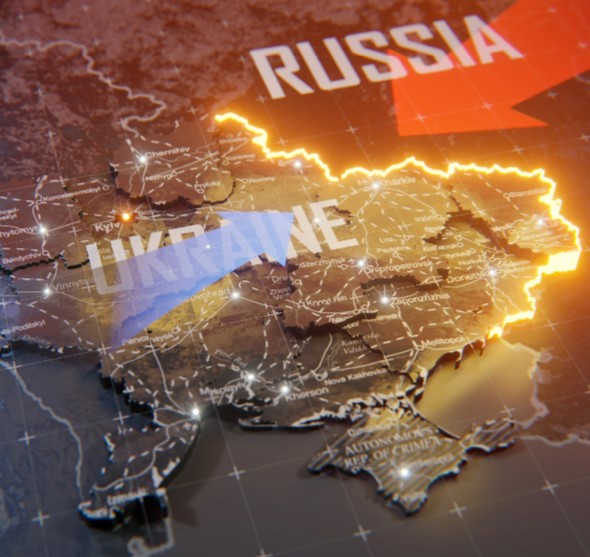
Equipment manufacturers and civil shipyards face over €700 million in risks on current contracts in Russia and Ukraine. This crisis affects up to 25% of the order books for some members, compounded by rising raw material and energy costs. Furthermore, the departure of Ukrainian workers currently employed in French shipyards could significantly impact production line continuity.