The M941 Tournai in Zeebrugge: a new milestone in European mine warfare
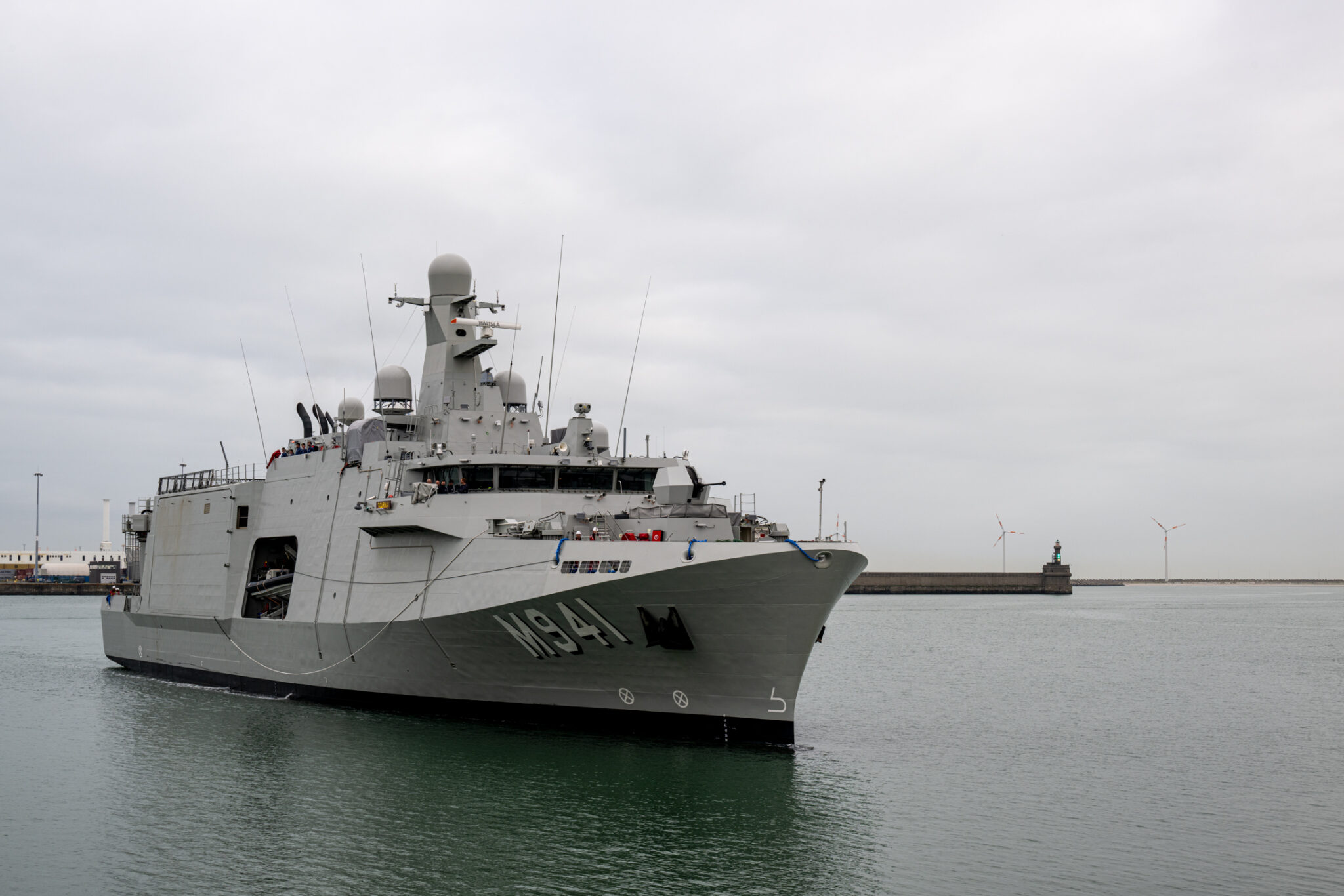
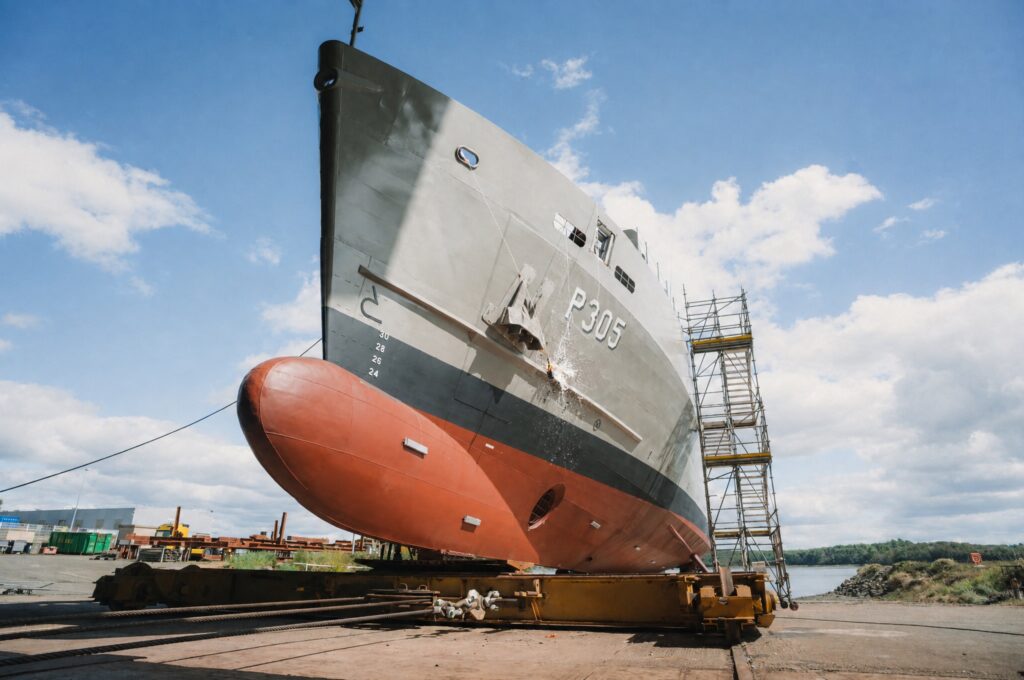
The third vessel in the rMCM programme and the second intended for the Belgian Navy, the M941 Tournai arrived in Zeebrugge on 22 September 2026. The vessel will undergo an official transfer of ownership to the Belgian State on 25 September 2026. Following the Dutch vessels Oostende and Vlissingen, this milestone marks the ramp-up of a new generation of mine countermeasures capabilities, designed to keep sailors out of the danger zone.
The rMCM programme is primarily a Belgian-Dutch collaboration. Awarded in 2019 to the Belgium Naval & Robotics consortium, formed by Naval Group and Exail, it provides for twelve City-class vessels – six for Belgium and six for the Netherlands – equipped with autonomous systems. Unmanned surface vessels, underwater drones and aerial platforms make up a ‘toolbox’ capable of detecting, classifying, identifying and neutralising mines, whilst the mother ship remains at a distance. This so-called ‘stand-off’ approach reflects a shift in the operational paradigm.
In addition to this Belgian-Dutch cooperation, there is a Franco-Belgian-Dutch framework. Following a formal agreement reached at Euronaval in 2022, a Memorandum of Understanding was signed in 2023 to harmonise the future mine warfare capabilities of the three navies. France will therefore draw on the rMCM design for its future mine warfare vessels under the SLAM-F programme, with adaptations tailored to its specific requirements. The aim is to maximise design commonality, interoperability and opportunities for joint support. This initiative builds on a long-standing cooperation between France, Belgium and the Netherlands in the field of mine warfare.
Naval mines remain a threat that is both historical and present-day. They can block access to a port, disrupt a trade route or threaten critical maritime and subsea infrastructure. In the North Sea, the risk is not merely a future one: munitions left over from the world wars continue to be discovered and neutralised. As recently as 17 September 2026, a First World War mine containing approximately 150 kg of explosives was safely neutralised. Modernising mine warfare therefore means addressing both the threats of the past and those of the future.
For the French shipbuilding industry, the arrival of the Tournai in Belgium also serves as a demonstration of expertise. Naval Group is responsible for the design of the vessels, overall integration, as well as the testing and commissioning of the mission system. Kership, a joint venture between Naval Group and Piriou, oversees the construction of the vessels, which are assembled in Brittany. Exail supplies the drone-based mission system, at the heart of the operational concept, with a strong industrial presence in Belgium for the production and maintenance of some of the drones.
This programme illustrates the French naval industry’s ability to offer a comprehensive system combining naval architecture, robotics, sensors, software and mission integration. It also demonstrates how European industrial cooperation can draw on French expertise whilst generating benefits and transferring know-how to partners.
The Tournai exemplifies a more robotised military capability, enabling crews to operate at a safe distance from the threat, and a French naval industry firmly established at the heart of European defence cooperation.
Recent Articles