


CONSTRUCTIONS MECANIQUES DE NORMANDIE ( CMN )
50105 CHERBOURG-EN-COTENTIN CEDEX FRANCE
Since 1946, CMN has been mastering the complexities of the most ambitious projects in Cherbourg, continually pushing the boundaries set by the sea.
CMN actively contributes to the energy transition by leveraging the potential of the oceans through its subsidiary HydroQuest, leader in the tidal energy industry.
Our dedicated team—comprised of talented men and women—shares a commitment to excellence and the transfer of unique expertise, enabling us to imagine, develop, build, and market the most innovative and high-performing ships and related services worldwide.
To constantly innovate to meet the increasing demands for protecting and promoting the world’s maritime environment, aiming to create a safer and more sustainable future.
Design : CMN’s strength lies in its capacity to develop products from initial design to operational deployment. CMN’s Technical Department unites all the skills needed to design a product. Our naval architecture and design teams diligently work to ensure all our customers’ requirements are met.
Integration : In addition to design, CMN has a Systems Department that integrates various navigation, communication and defense systems aboard a vessel, ensuring the coherence and reliability of the entire system architecture.
Production : One of the key aspects of CMN’s business model is its mastery of all the professions involved in constructing a vessel. The Production Department encompasses 14 specialities that collaborate to achieve a single goal, all working to achieve the same goal: building exceptional ships.
Related services : In addition to construction and commissioning, CMN supports its clients through crew training and operational maintenance, ensuring vessel readiness and controlled operating costs.
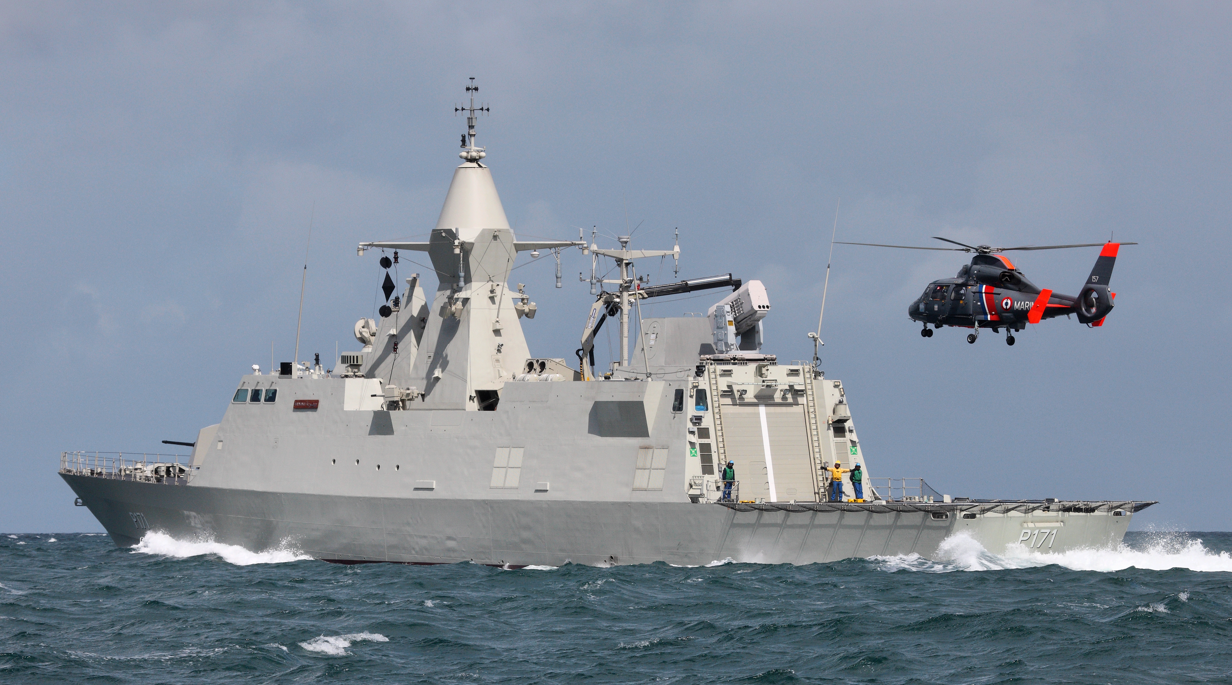
Corvettes are ocean-capable vessels designed for long-term surveillance missions within and beyond Exclusive Economic Zones (EEZ). Their offensive and defensive capabilities allow them to conduct effective and sustained monitoring on the high seas.
BR71 MkII :
- Length Overall: 70.3 m.
- Beam Overall: 11.0 m.
- Maximum speed: 30 knots.
- Range: 2500 NM at 12 knots.
- Crew: 50 members.
- Hull: Steel.
- Superstructure: Aluminium.
- Classification: Bureau Veritas.
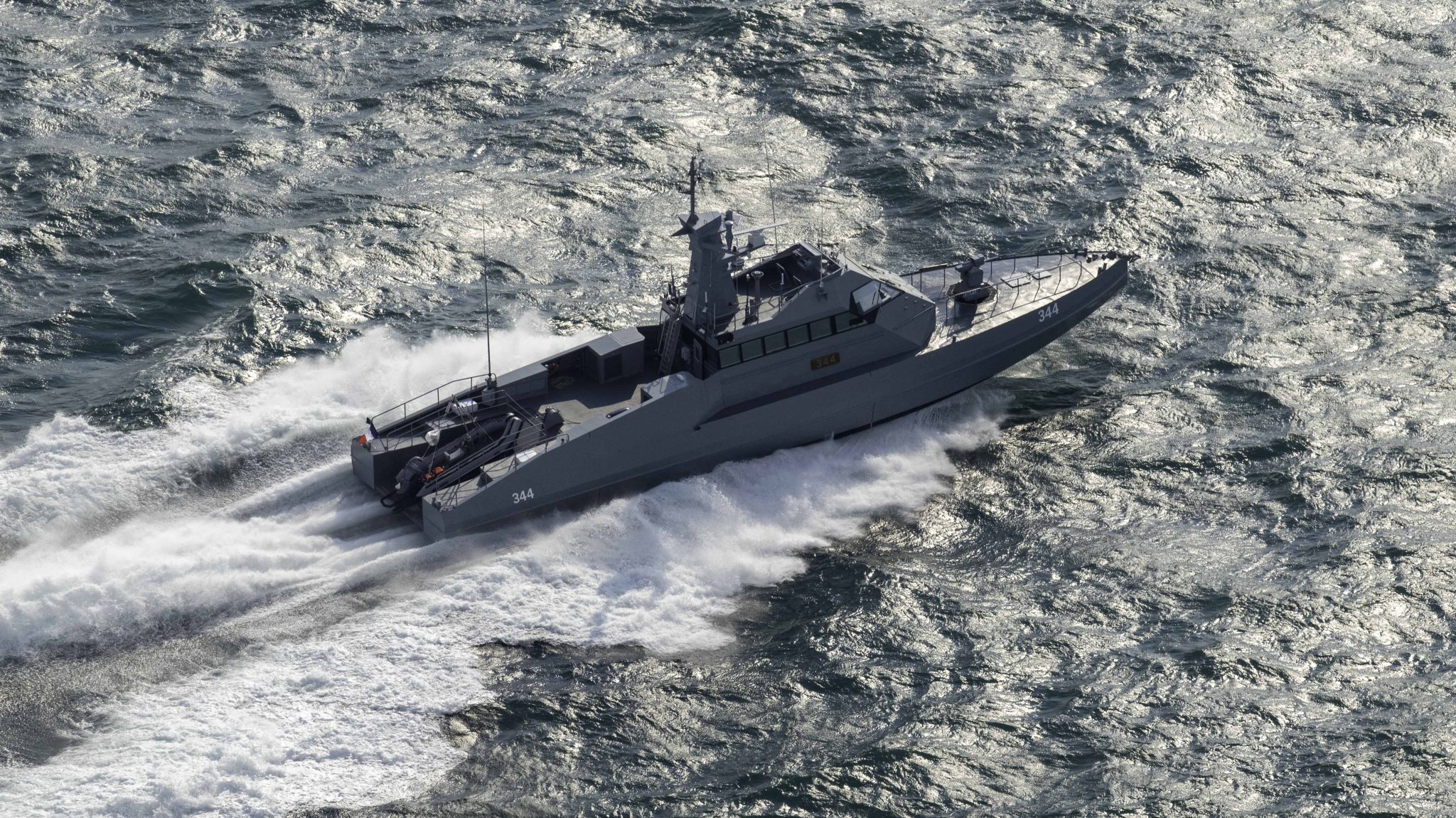
The wide range of interceptors provides effective defense against coastal threats, safeguarding vulnerable ships and offshore oil and gas platforms. Designed for special forces, these vessels are specially conceived to conduct sea strike operations, reaching speeds of over 70 knots.
HSI32 MkII :
- Length Overall: 32.2 m.
- Beam Overall: 7 m.
- Maximum speed: +46 knots.
- Range: 1200 NM at 12 knots.
- Crew: 12 members.
- Hull and superstructure: Aluminium.
- Classification: Bureau Veritas.
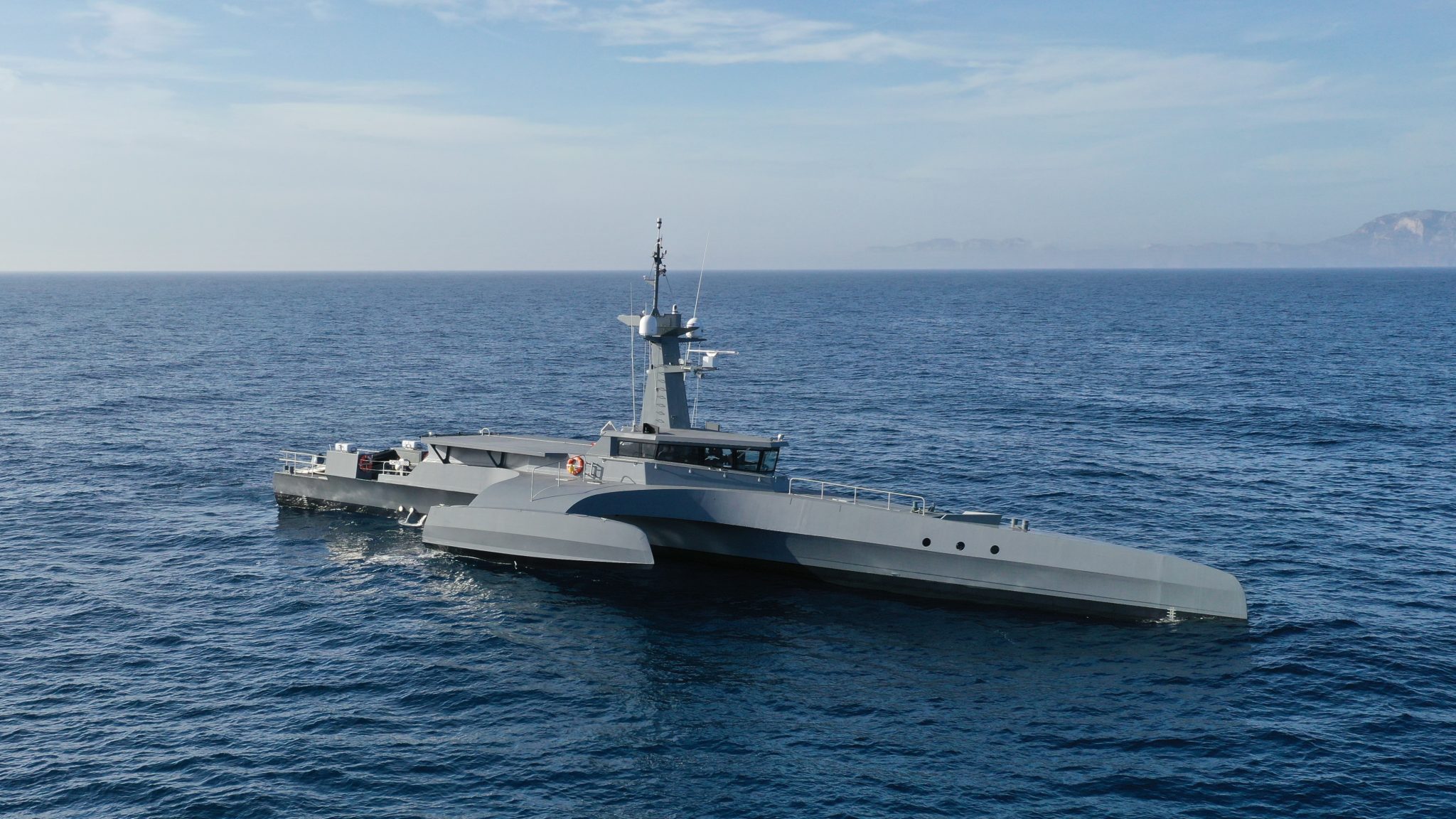
The Ocean Eagle 43 is part of the Offshore Patrol Vessel (OPV) range. This highly efficient trimaran combines high cruising speeds with excellent autonomy, thanks to its low fuel consumption while providing a high level of comfort even in rough sea conditions.
OE 43 :
- Length Overall: 43.6 m.
- Beam Overall: 15.2 m.
- Maximum speed: 30 knots.
- Range: 5000 NM at 11 knots.
- Crew: 13 members.
- Hull and superstructure: Composite.
- Classification: Bureau Veritas.
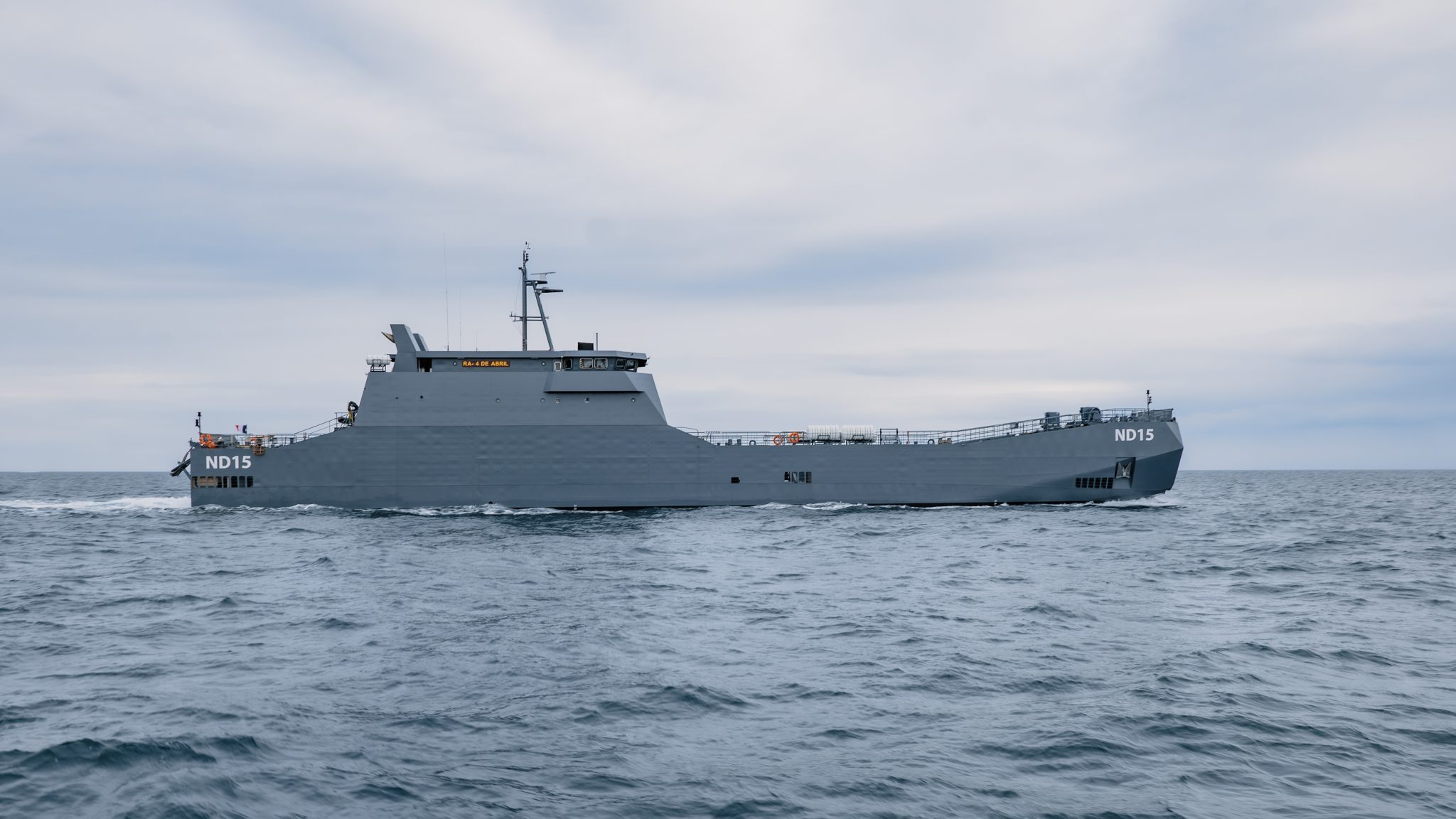
For over 50 years, we have been providing amphibious vessels tailored to the specific needs of each navy. These landing ships feature reduced draughts, increased loading capacities, and speeds of up to 18 knots. Ranging from 10 to 80 meters, they offer all the necessary deployment solutions.
LCT 200 :
- Length Overall: 70 m.
- Beam Overall: 10.6 m.
- Maximum speed: 16 knots.
- Range: 2150 NM at 16 knots.
- Crew: 18 members.
- Hull and superstructure: Steel.
- Classification: Bureau Veritas.
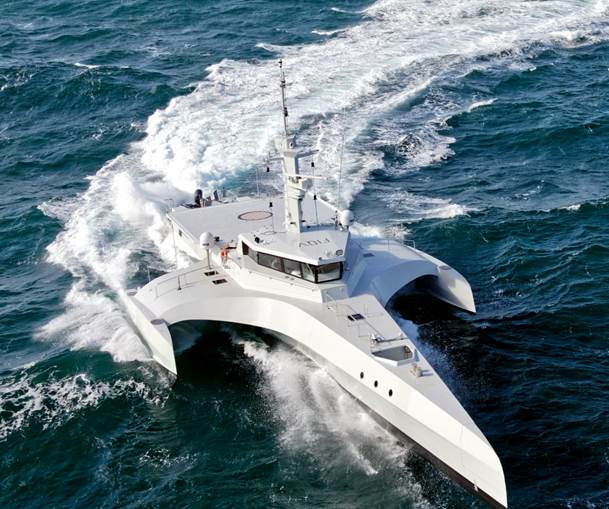
Maritime patrol trimaran.
Aucun média trouvé pour cet adhérent
 Design, engineering, regulation
 Launch and Recovery Systems (LARS), deployment, and docking
 Capability-based system integrator
 Physical platforms and launch vehicles
 Research, testing, and training

Since 1946, CMN has been pushing the boundaries of maritime technology. 77 years of innovation, 38 navies equipped, and comprehensive mastery of the value chain: from concept to operation. Today, CMN is leading the transition to autonomous naval systems: unmanned platforms featuring high speed, extended endurance, modular missions, and swarm control—redefining the naval power of tomorrow.
Based in Cherbourg, CMN is a shipyard that designs, builds and supports complex maritime platforms: from 10-metre interceptors to corvettes of 130 metres and beyond. From naval architecture to combat systems integration, from production to sea trials, every step is mastered in-house. Within the CMN NAVAL group, present in France, Germany and the United Kingdom, CMN has delivered over 3,500 vessels to 48 navies.
U HSI 32
Intercepteur semi-autonome de 32 m en aluminium, dérivé du HSI32 MkIII (plus de 60 unités livrées). Vitesse maximale : 46 nœuds. Autonomie : 1 200 NM à 12 nœuds. Système de pilotage à distance permettant l’absence d’équipage à bord. Conçu pour la frappe en mer, la protection de convois et la sécurité côtière. Démonstré en mer en juillet 2025 devant la Marine nationale et des partenaires industriels européens. Classé Bureau Veritas.
U OCEAN EAGLE 43
Patrouilleur trimaran semi-autonome de 43 m en composite, dérivé de l’Ocean Eagle 43 éprouvé. Vitesse maximale : 30 nœuds. Autonomie : 5 000 NM à 11 nœuds. L’architecture trimaran assure une stabilité supérieure et une consommation réduite, garantissant une présence prolongée en mer sans équipage à bord. Conçu pour la surveillance maritime étendue, le contrôle des ZEE, la lutte anti-piraterie et la protection des installations offshore. Classé Bureau Veritas.
U DV 15
Intercepteur semi-autonome de 15 m en composite. Vitesse maximale : 65 nœuds. Autonomie : 250 NM à 50 nœuds. Coque Deep Vee avec infusion carbone. Système de pilotage à distance permettant l’absence d’équipage à bord. Conçu pour l’interception haute vitesse, la contre-terreur, la sécurité côtière et la protection des infrastructures maritimes. Classé DNV-GL.
Gladiator
Intercepteur entièrement autonome, sans équipage, basé sur le U HSI. Vitesse maximale : 46 nœuds. Architecture C3 résiliente, résistante au brouillage et aux cyberattaques. Missions modulaires reconfigurables en conditions opérationnelles : ASuW, ASW, AAW, MMCM, ISR, escorte de convois, protection de plateformes offshore, défense anti-drone. Contrôle en essaim par deep learning. Ravitaillement en mer autonome.