Liquefied Gas Transport: Decarbonization Gains Momentum at Gastech 2026
On September 22, 2026, at the Gastech exhibition, GTT Energy (the group’s operational unit dedicated to energy containment and management systems) presented several major technological advancements. In response to stricter global environmental standards, these innovations address a strategic challenge for the maritime sector: facilitating the adoption of decarbonized propulsion and alternative fuels (LNG, ethane, ammonia) while ensuring fleet economic profitability.
An Efficiency Breakthrough for the LNG Carrier Fleet
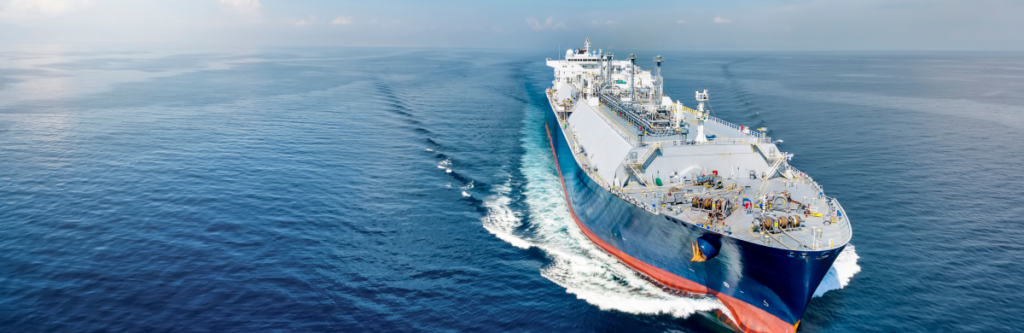
In the strategic LNG market, the company reached a milestone with its GTT NEXT1® technology. Validated by five major classification societies for 174,000 m³ vessels, this membrane brings the daily boil-off rate (BOR) of the cargo down to 0.07%. In parallel, the Group is exploring new propulsion architectures by partnering with Shell and Lloyd’s Register on a 200,000 m³ hybrid-electric LNG carrier, a size whose compatibility with virtually all global terminals has recently been confirmed by a study.
Another tangible benefit for shipowners is the ability to extend heavy maintenance schedules. Thanks to an Approval in Principle granted by Lloyd’s Register, the recommended interval between dry-dockings increases from 5 to 7.5 years, maximizing operational time at sea without compromising safety criteria.
Scaling Up Ethane Transport and Eco-designed Materials
Innovation also extends to the fast-growing ethane transport segment. GTT Energy is working on two new vessel capacities: an ultra-large ethane carrier (ULEC) of 150,000 m³ in partnership with South Korean shipyard HD Hyundai, and a 100,500 m³ very large ethane carrier (VLEC) developed with Hudong-Zhonghua, featuring a bi-oblique No. 4 tank designed to optimize unused space onboard.
Finally, environmental reduction applies to the insulation materials themselves. By completing the qualification of a hydrofluoroolefins (HFOs)-based insulation system developed by Dongsung Finetec, the Group is accelerating the replacement of hydrofluorocarbon blowing agents with molecules featuring a very low Global Warming Potential (GWP).
These announcements, which build upon the recent deployments of the LNG Performance Centre and 2 barg fuel tanks, demonstrate the capacity of GICAN members to transform environmental requirements into cutting-edge industrial standards.
Recent Articles